TrailSwing towing performance.
Class IV, SAE J684 tested.
Built around a solid billet steel hitch assembly. TrailSwing’s published testing reports a pass to SAE J684 standards for a Class 4 rating.
Class 4. Tested and passed.
Our solid billet hitch assembly was physically loaded and measured for permanent deflection. The published Class 4 test sheet lists compliance in all five load cases, including a compressive and downward load of 5,180 / 5,180 lb.
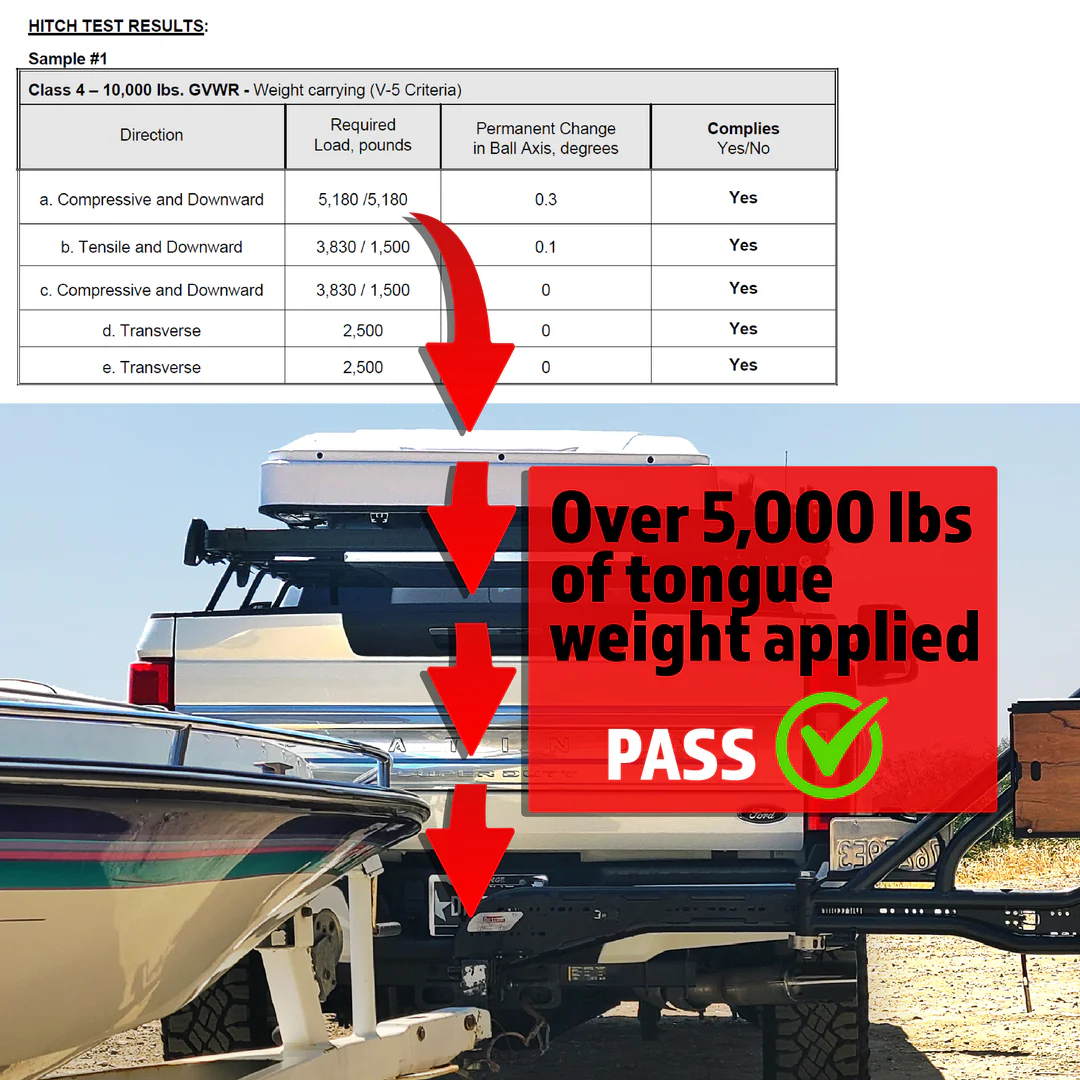
The published results
| Load direction | Load (lb) | Permanent change* | Complies |
|---|---|---|---|
| Compressive & downward | 5,180 / 5,180 | 0.3° | Yes |
| Tensile & downward | 3,830 / 1,500 | 0.1° | Yes |
| Compressive & downward | 3,830 / 1,500 | 0° | Yes |
| Transverse | 2,500 | 0° | Yes |
| Transverse | 2,500 | 0° | Yes |
*Permanent change in ball axis, as recorded on the original test sheet.
Test load versus operating limit
These are forces applied during testing. They are not a permitted tongue weight for your vehicle or towing setup.
Tested beyond the rated load.
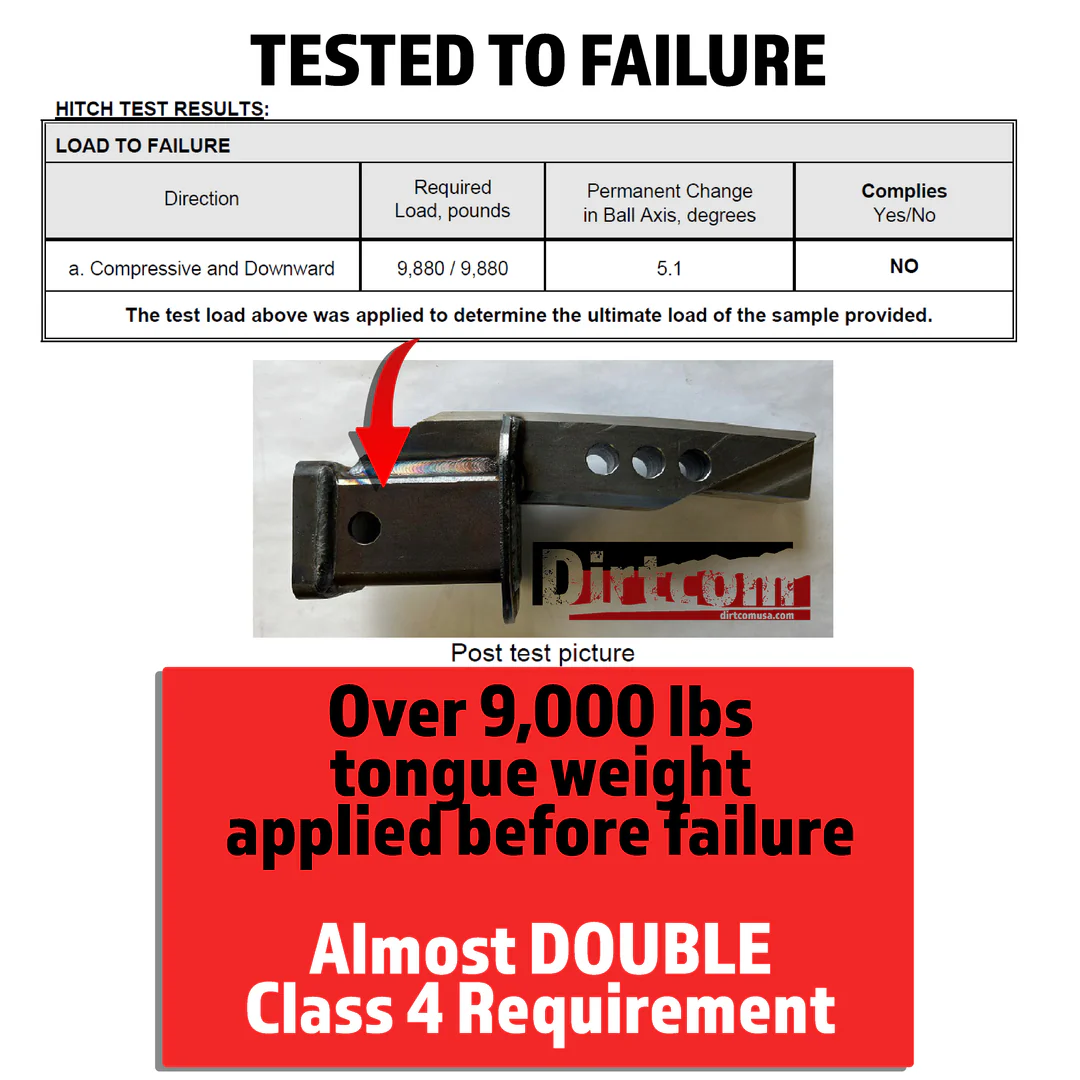
A separate test pushed the sample to bend failure. The published sheet records 9,880 / 9,880 lb of compressive and downward force, with a 5.1° permanent change in ball axis.
That destructive test is marked “No” for compliance. It establishes the sample’s ultimate load; it does not increase the product’s rating.
The rating remains Class 4 — 10,000 lb.
The failure-test force is not a working tongue-weight limit or a Class 5 rating.
Solid billet steel at the hitch.
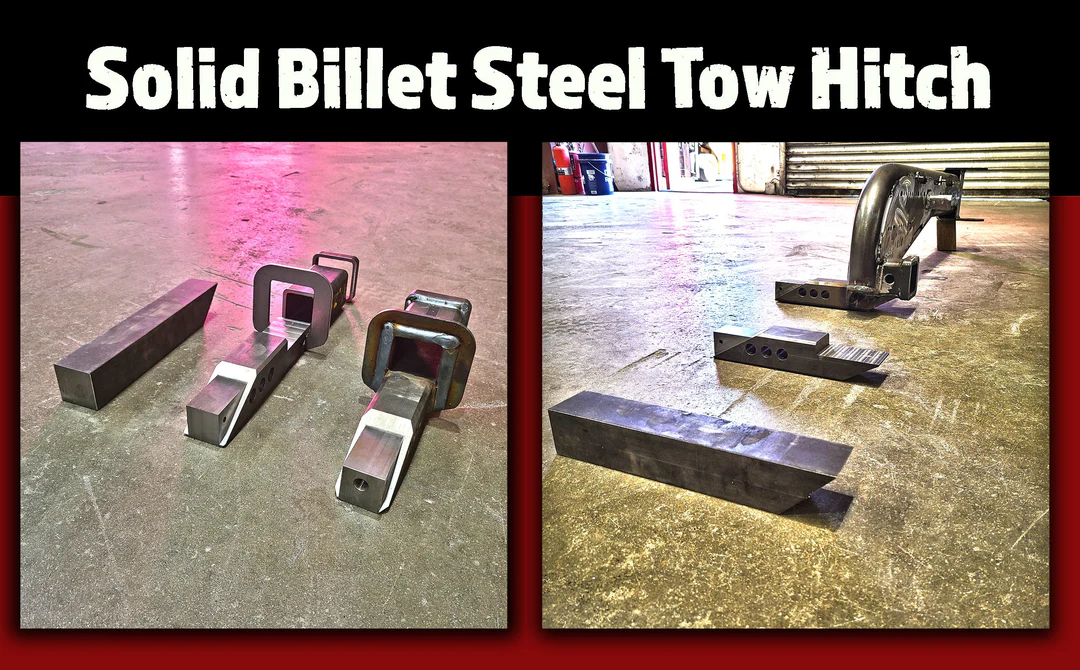
The original TrailSwing towing page documents the solid billet steel hitch assembly and its physical load testing.
Your vehicle’s limits still apply.
Check your vehicle owner’s manual for maximum trailer weight and tongue weight. Vehicles differ, and tongue weight and leverage affect the overall towing capacity of your setup.
The published hitch rating does not increase your vehicle’s towing capacity.
Read the evidence. Check the configuration.
The published graphics identify the loading directions, applied forces, permanent change in ball axis and whether each load case complies. The Class 4 graphic identifies Sample #1 and weight-carrying V-5 criteria. The page reports testing to SAE J684.
The graphics do not identify a test date, laboratory or production revision. Ask our team to confirm the test documentation and applicability for the exact carrier you intend to use. We do not describe the graphics alone as an independent certification.
Which TrailSwing should I choose?
Compare the Standard, HD and listed AE applications. Check receiver and hatch-clearance guidance before choosing a configuration. A vehicle listing does not change the vehicle’s towing limits.
TrailSwing vs. other carriers.
You have seen the test results. Now compare the features, included equipment and fitment information for your setup.
| What matters | TrailSwingOurs • by Dirtcom | Other carriersWhat to check |
|---|---|---|
| Physical hitch testing | Published physical test resultsFive load cases and a separate destructive-test graphic. Our site reports SAE J684 hitch testing; confirm coverage for your model and revision.Inspect the test graphics → | Ask to see the evidenceRequest the physical test report, loading conditions and results for the exact model. A rating alone does not show how it was tested. |
| Swing-out rear access | Access without replacing your bumperHitch-mounted swing-out design. Check clearance for your doors, hatch or tailgate. | Verify by modelCheck the opening path and rear access with your wheel, tire and accessories fitted. |
| Opening direction | Left or right opening optionsChoose the available configuration on your TrailSwing product listing. | Check the available optionsConfirm which side opens and whether it suits your parking and rear-door layout. |
| Fitment information | Model and clearance diagramsCompare Standard, HD and AE geometry against your actual vehicle.See the fitment diagrams → | Ask for measurementsVerify receiver size, hitch-pin position, bumper clearance and tire/wheel limits. |
| Included equipment | Carrier, mounting components and hardwareIncluded with Standard, HD and AE. Review the equipment photo on your product page. | Confirm the complete packageCheck what arrives in the box and which mounting parts cost extra. |
| Accessory choices | Build around your setupOptional tables, accessory hitches and other accessories are sold separately. Check compatibility before ordering. | Compare the equipped costInclude the accessories you need and confirm the total equipment-load limits. |
| Warranty and support | Limited lifetime warrantySee registration, purchase-date conditions and coverage in our warranty terms. Contact us for help choosing your setup.Read the warranty terms → | Review the termsCheck coverage, exclusions, registration requirements and who handles support. |